




 [pinit count=”horizontal”]
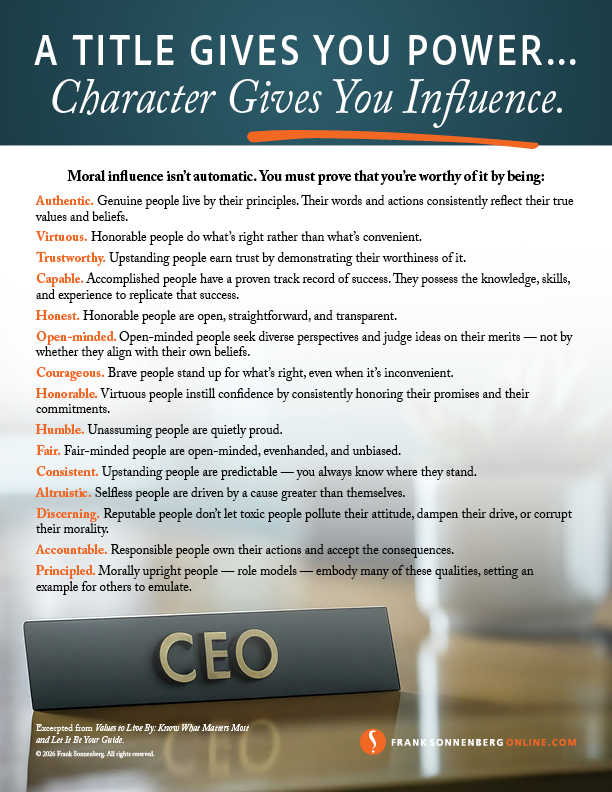
A Title Gives You Power…Character Gives You Influence.
Moral influence isn’t automatic. You must prove that you’re worthy of it. People, companies, or nations earn moral authority by being:
Authentic. Genuine people live by their principles. Their words and actions consistently reflect their true values and beliefs.
Virtuous. Honorable people do what’s right rather than what’s convenient. They don’t twist the rules for personal gain.
Trustworthy. Upstanding people earn trust by demonstrating their worthiness of it. Trust must be carefully constructed, vigorously nurtured, and constantly reinforced.
Capable. Accomplished people have a proven track record of success. They possess the knowledge, skills, and experience to replicate that success.
Honest. Honorable people are open, straightforward, and transparent. They don’t distort the truth or exaggerate claims to enhance appearances.
Open-minded. Open-minded people gather information from diverse sources, solicit input from those of varied backgrounds and viewpoints, and assess it based on its merits rather than its alignment with their own beliefs.
Courageous. Brave people stand up for what’s right, even when it’s inconvenient.
Honorable. Virtuous people instill confidence by consistently honoring their promises and their commitments. Their word carries the weight of a contract.
Humble. Unassuming people are quietly proud. They’re modest about their achievements, grounded in their values, and have nothing to prove to others.
Fair. Fair-minded people are open-minded, evenhanded, and unbiased. They don’t show favoritism — they treat everyone equally and justly.
Consistent. Upstanding people are predictable — you always know where they stand. They don’t sway with the wind, even when it’s convenient to do so.
Altruistic. Selfless people are driven by a cause greater than themselves. They prioritize the well-being of others, often placing others’ needs above their own.
Discerning. Reputable people refuse to let toxic individuals pollute their attitude, dampen their drive, or corrupt their morality. They choose to surround themselves with people who uphold high standards of honor and integrity.
Accountable. Responsible people own their actions and accept the consequences, instead of shifting the blame to others.
Principled. Morally upright people — role models — embody many of these qualities, setting an example for others to emulate. As Nobel peace prize winner Albert Schweitzer said, “Example is not the main thing in influencing others. It is the only thing.”
What Is Your Leadership Style?
Please leave a comment and tell us what you think or share it with someone who can benefit from the information.
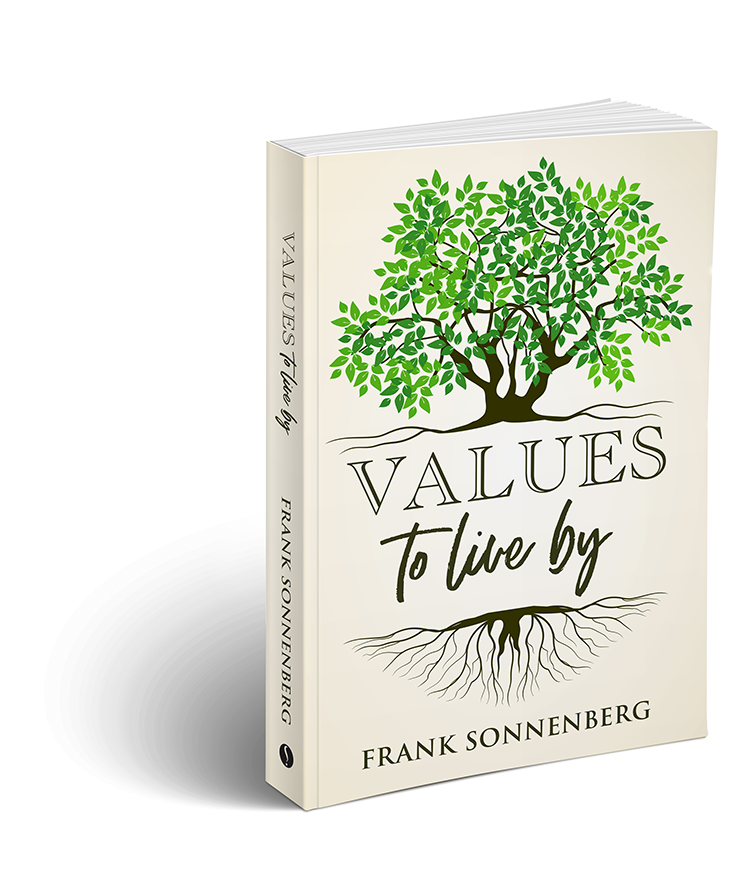
This is an excerpt from Values to Live By: Know What Matters Most and Let It Be Your Guide
Additional Reading:
What Works Better — Obedience or Commitment?
Leadership Scorecard
Counterfeit Leadership
Why Moral Authority Matters
5 Qualities of Great Leaders
It’s Better Done Than Said
23 Ways to Spot a Hypocrite
How to Spot Someone on a Power Trip
If you like this article, subscribe to our blog so that you don’t miss a single post. Get future posts by RSS feed, email or Facebook. It’s FREE.
Follow me:
Facebook
LinkedIn
X
Pinterest and
Instagram

Leave a Comment