




Some people just don’t have much of a moral compass or direction, and they’re not bothered about it — in fact, they’re comfortable there. You can call out their behavior, argue with them, or even appeal to their basic decency, but it rarely makes a difference. It’s not a lapse in judgment; it’s a pattern. No amount of reasoning or moral appeal is likely to convince them, and expecting change is usually a waste of energy. As author Jonathan Swift said: “You can’t reason someone out of something they didn’t reason themselves into.”
This phenomenon isn’t limited to moral character. Some people are simply rude, mean-spirited, or outright selfish. It’s one thing when someone’s behavior harms themselves, but it’s quite another when their actions affect others.
Where Bad Decisions Go to Multiply
The following 16 attitudes and behaviors are telltale signs of poor character. If you identify with any of them, it’s worth considering what that says about you.
Selfish. Do you give more than you take, or do you take more than you give?
Self-centered. Do you consider the needs of others, or focus primarily on your own needs?
Unprincipled. Do you live with honor and integrity, or do you abandon your values when it benefits you?
Rude. Are you courteous or disrespectful to others?
Lazy. Do you contribute your fair share of the work, or do you expect others to carry the load?
Cutthroat. Do you seek win-win relationships, or take a winner-take-all approach?
Mean-spirited. Do you treat others with kindness, or do you treat them coldly?
Envious. Are you genuinely happy for the success of others, or do you resent their achievements?
Disloyal. Do you remain loyal to people, or do you betray their trust?
Entitled. Do you earn rewards through hard work, or do you expect rewards without earning them?
Abusive. Do you treat others well, or do you use intimidation, manipulation, or harm to control them?
Greedy. Do you know the meaning of enough, or do you constantly seek more?
Power hungry. Do you use power to serve others, or do you pursue power to satisfy your need to control?
Prejudiced. Do you judge people based on their character and actions, or do you make unfair assumptions based on their group or identity?
Dishonest. Do you value honesty and integrity, or are you willing to lie, deceive, or cheat to get what you want?
Corrupt. Are you honest and principled, or are you willing to sacrifice your integrity for personal gain?
Choosing the Scenic Route to Regret
When you encounter people who display poor character, your first instinct may be to save them from themselves. But when you call them out for their behavior, they often act as if you’re the one who’s crazy — even though they know exactly what you mean. Their next move is to twist themselves into knots trying to justify their actions, grasping at one excuse after another. And, when the excuses start to wear thin, the blame shifting begins. They point fingers and shift responsibility in every direction except inward.
It’s the same cycle every time: deny, deflect, repeat. Until the consequences of their actions catch up with them. Then, suddenly, the world is unfair.
In fact, some may even blame you for their circumstances, and there may be some truth in that. If they’d been held accountable the first time, they might not have done it again. But now they have to live with the consequences.
The last thing you can expect is for them to look in the mirror.
The Road That Builds Role Model Material
The one thing the items in the list above have in common is that they all come at someone else’s expense. It may feed their ego to talk down to people, to brag about their possessions (even if they were secured by ruthless means), or to profit on the backs of others. But when they’re staring at the ceiling in the middle of the night, they know exactly who they’ve become. And all the riches in the world can’t compensate for that empty feeling. We have one life to live, and they choose to spend theirs looking out for themselves instead of others.
You can’t change these people unless they choose to change themselves. They’ve chosen their path, even if it’s a dead end in that direction.
Your time is better spent becoming the best person you can be.
A life is not measured by what you accumulate, but by what you share — the experiences you have, the relationships you build, the people you help, and the values you live by. You can’t carry anything with you when you leave this world, only the mark you leave on others. In the end, it’s not what you have, but who you become that defines your life.
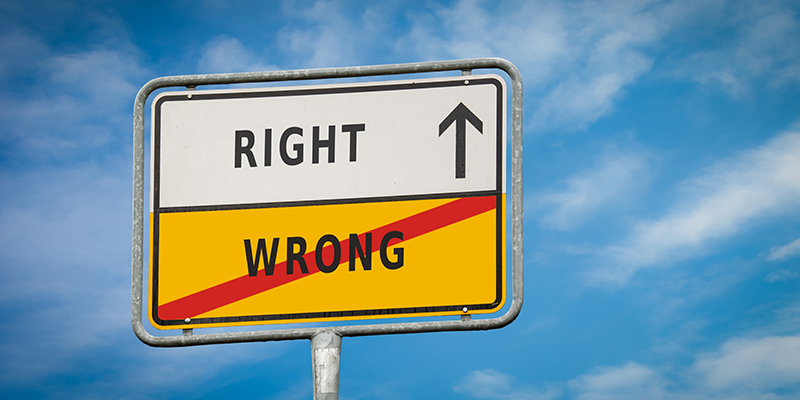
Are You Heading in the Wrong Direction?
Please leave a comment and tell us what you think or share it with someone who can benefit from the information.
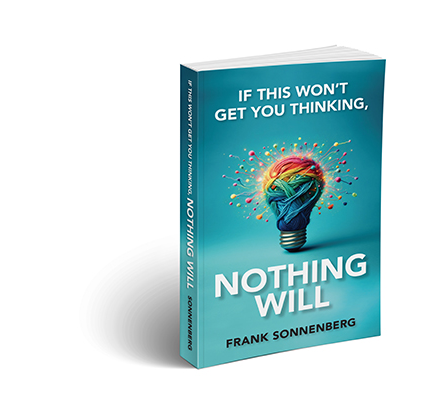
“This book is a timeless call to pause, reflect, and focus on what matters. In an age of relentless noise and distraction, it offers 365 daily anchors for living with integrity, purpose, and courage. More than a book — it’s a companion for a life well lived.”
Faisal Hoque, Founder, Shadoka and NextChapter, and #1 Wall Street Journal bestselling author ofREINVENT and TRANSCEND
Check it out by clicking here!
Additional Reading:
Moral Character Matters
The Consequences of No Consequences
Never Lower Your Personal Standards. Never!
Are You Selfless or Selfish?
Lowering Standards Is a Fool’s Errand
8 Ways to Spot Greedy People
Moral Authority Is Earned
Are You Racing in the Wrong Direction?
If you like this article, subscribe to our blog so that you don’t miss a single post. Get future posts by RSS feed, email or Facebook. It’s FREE.
Follow me:
Facebook
LinkedIn
X
Pinterest and
Instagram

Good morning, Frank,
This is an excellent read. I have tried so hard to change someone and only in the last few years have realized that it’s impossible to remove the spots on a leopard or the stripes on a tiger. Instead, I am working on myself and learning to let go. Not always an easy thing to do but it sure is helping me deal with the stress.
Every morning I read aloud so that my spouse can hear me, from “If This Won’t Get You Thinking, Nothing Will.” An excellent primer that should be given to children and adults.
Would be so wonderful if every school had a class in being a decent and caring human being.
Sending you my best.
As always,
Jill Pontiere
Hi Jill,
Thank you for your thoughtful note. I think you’ve arrived at a very healthy philosophy when it comes to trying to change others. As you’ve discovered, we can’t change people, but we can change ourselves, let go, and choose how we respond. That’s not always easy, but as you said, it can certainly reduce the stress that comes with trying to change what we can’t control.
And thank you for your interest in my new book and for incorporating it into your morning reading. That really means a lot to me.
Interestingly, I heard from a fourth-grade teacher just last week who told me that she begins every day by reading one of the passages from the book to her class and asking the students what it means to them. She sent me the page on “Own Your Life,” along with the responses from two of her classes.
She said some of the material is a little advanced for their age, but the students absolutely love the exercise. I thought that was wonderful.
I share your hope that more schools will find ways to help young people develop the values that will guide them throughout their lives. In fact, I’m currently in contact with a group of teachers who are exploring just that. 🙂
Wouldn’t it be something if every school helped young people not only excel academically, but also learn how to live with honor and integrity?
Thanks again for taking the time to write, Jill. I truly appreciate your support and the way you’re helping bring these ideas to life.
Best,
Frank